Fordham Notes: Information Technology
Showing posts with label Information Technology. Show all posts

Thursday, February 20, 2014

How Flat is the World? Finance Expert Offers Answers

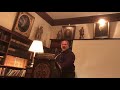
Bruce Greenwald (photo: Dana Maxson)
Yes, we live in a “flat” world, but other trends are just as relevant to understanding the current state of the global economy, a leading financial expert said Feb. 19 in a talk sponsored by Fordham. 

“It’s not just about globalization. There are other trends that are as or more important,” said Bruce Greenwald, Ph.D., professor of finance and asset management at Columbia Business School and director of research and senior advisor at First Eagle Funds. Among the trends are “extraordinary improvements in manufacturing productivity” and more demand for services, he said. 

He gave a talk at the Harmonie Club in Manhattan that was sponsored by the Fordham Wall Street Council and Fordham's Schools of Business. Throughout the talk he referred to Thomas Friedman’s book, The World Is Flat: A Brief History of the Twenty First Century (Farrar, Straus & Giroux 2005), saying certain of its predictions never came to pass. 

He noted that innovations in information technology had been expected to fuel “relentless low-wage, high-quality competition from places like China and India,” imperiling U.S. companies. In fact, he said, American companies have thrived because technology fueled the breakup of markets into smaller niches—either geographic areas or types of products and services—that are easier to dominate. 

For instance, he said, “if you look at the history of the personal computer industry, the people who make all the money are not the Apples and the IBMs, who try to do everything, or the Japanese chip makers who try to do everything. It is the people who specialize—Google in search, Oracle in databases, Intel only in CPU chips.” 

Also protecting companies from globalization’s effects is the trend toward services, which are “predominantly local markets” and therefore easier to dominate, he said. An example is John Deere’s success in its tractor servicing business, he said: “In servicing tractors, you can dominate local geographies by having the best sales and service organization in that geography.”

“The technology changes, coupled with these changes in the degree of competition in (the) service-oriented economy, seem to have created an environment where, a), globalization is irrelevant, and b), these firms have the freedom and autonomy from competition to actually institute aggressive and successful cost reduction, or productivity improvement, projects.”

The real problem today is international trade imbalances that make it very hard to sustain economic growth over the long term, he said. Trade imbalances—long a feature of the global economy—are being driven by countries that are trying to keep their manufacturing sectors alive, which fuels the production of goods that have to be exported because there’s not enough domestic demand for them, he said. 

--Chris Gosier

Thursday, May 24, 2012

Gabelli Student Honored in Information Technology Panel


Robert Villegas, seated at the far left with the panel.
Contributed Photo

Robert Villegas took home a diploma along with his fellow Gabelli School of Business graduates on Saturday, May 19. 

But Villegas, who majored in management of information and communications systems (MICS), was already well on his way to a promising career, as evidenced by his inclusion in an April 30 panel discussion, “Welcoming the Next IT Generation,” at the CIO Executive Council, held at San Marco Island, Florida.

Villegas was the only college student to participate in the panel, which featured six standout entry-level rising stars in information technology, aged 18-25, and was designed to educate chief information officers on how to increase student interest and attract top talent to the IT industry. 

He was nominated to be on the panel by Frank J. Sirianni, Ph.D., vice president and CIO at Fordham. A Davie, Florida native, he interned with Fordham IT’s Business Intelligence team, the Investment Bank Technology Audit department at JP Morgan Chase, and as an IT desktop analyst with the Crohns & Colitis Foundation.

 Congratulations Robert!
—Patrick Verel

Tuesday, January 12, 2010

Rose Hill Campus Gets New Data Center

The Rose Hill Data Center, which hosts everything from online course catalogues to payment records and transcripts at Fordham’s Rose Hill campus, has been given a major upgrade.

The center, which until recently was housed in Dealy Hall, has been augmented with several new features that will safeguard the University’s most sensitive information. The upgrade, which began in January 2009, greatly improves both redundancy and efficiency, resulting in an environmentally-friendly system with enhanced risk management capability.

“We were fortunate to take on this project at an advantageous point in time for a much needed facilities upgrade,” said Frank Sirianni, Ph.D., Vice President and Chief Information Officer. “As a result, we now have first-rate data centers on both campuses that will ensure business continuity in our records, not to mention the day to day University operations. Additionally, it provides us with complete certitude in the unfortunate event of a catastrophe.”

For increased efficiency, the Rose Hill data center contains a hot aisle containment system that regulates temperature in each server row within the facility. This is a 30% more efficient cooling scenario than the industry in-row cooling technology standard, and replaces an outdated system that relied on computer room air conditioner cooling units to control the air temperature throughout the room.

The center, whose exact location is being withheld by request of the Fordham Information Technology Department, also features 2N redundancy, which means there is a backup for every critical piece of power and cooling control within the structure.

In the event that there is a loss of public utility power in the surrounding area that results in an outage on campus, an on site generator will ensures that the data center continues to operate at full capacity. The redundancy extends to the data stored there and at a counterpart at the Lincoln Center campus as well.

All data and related systems will be transferred from Dealy Hall to the new location in advance of the Spring 2010 semester.

—Patrick Verel