Fordham Notes: IIHA
Showing posts with label IIHA. Show all posts

Monday, October 6, 2014

In the Media: Fordham's Alexander van Tulleken stresses humanity in U.S. ebola case

The IIHA's Alexander van Tulleken M.D.
Whether through its International Diploma in Humanitarian Assistance for those already in the field, or its undergraduate or master’s degree program for those who hope to work in the field, the goal of Fordham’s Institute for International Humanitarian Affairs is a serious one.

The institute aims to “educate a humanitarian workforce that will break the pattern of familiar mistakes,” such as paternalism, marginalization, or a top-down manner of doing things that hinders rather than helps.

In 2010, IIHA’s founding director, Kevin Cahill, M.D., a tropical disease expert and veteran of humanitarian missions in 60 countries, told FORDHAM magazine that establishing professional standards is crucial because without sufficient training, relief workers might unintentionally prolong a conflict or inflame local tensions. Rushing in with nothing more than compassion and good intentions, humanitarian workers will almost certainly repeat the same destabilizing mistakes as their predecessors, Cahill said.

In recent days, the public has seen the IIHA’s pedagogy in practice through Alexander van Tulleken, M.D., IIHA's Helen Hamlyn Senior Fellow. who has been a mainstay in the media during the current Ebola epidemic. Van Tulleken has done countless interviews since the news about the ebola epidemic caught fire in the Western media, and more so when the first case of Ebola was diagnosed in the United States on Sept. 30. 

On Oct. 3, when CNN’s Ashleigh Banfield asked van Tulleken about the four people close to the Texas man diagnosed with Ebola, who are now being forcibly quarantined in a Dallas apartment, he espoused the Jesuit value of homines pro aliis (men and women for others):


“You get a sense of the lack of humanity at the way they’re treating this family. You feel it’s not a nice way of dealing with it,” van Tulleken said. “You want to is make it easy for that family. They need someone bringing them food, they need someone bringing them linen. They need a task force of people making it easy for them to stay at home.

“The reason I say it’s sinister when you hear about the legal enforcement [is because] when that’s the main tool, that isn’t going to work for large numbers of people, and that’s what worries me.”

Van Tulleken also appeared on MSNBC’s Morning Joe. (Watch here.)


Follow Fordham’s YouTube account to keep up with his media appearances. And learn more about the IIHA here.

-Gina Vergel

Monday, August 4, 2014

Fordham Infectious Disease Specialist Talks to Media about Ebola

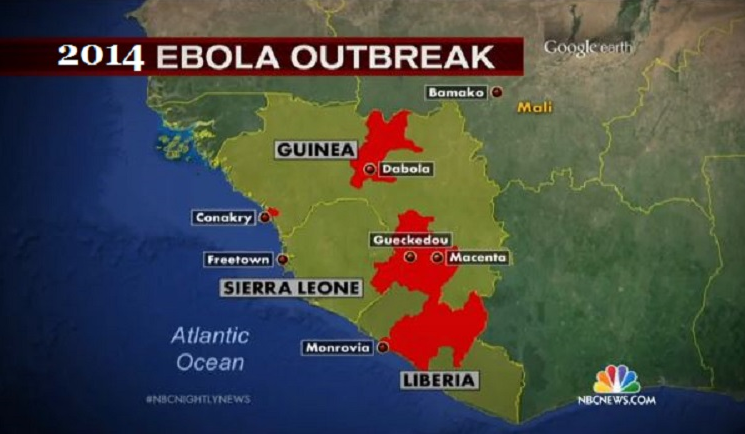
As two Ebola-infected humanitarian healthcare workers are transported to Emory University in Atlanta for treatment, concern about a potential outbreak is heating up. Fordham’s Alexander van Tulleken has appeared on various media outlets to discuss whether such fears are warranted.

Alexander van Tulleken, M.D.
File Photo by Patrick Verel

An infectious disease specialist and a senior fellow with Fordham’s Institute of International Humanitarian Affairs, van Tulleken has appeared on Al Jazeera America, MSNBC’s “Melissa Harris-Perry Show,” and locally, Fox-5 New York, with the same message:

“It’s very hard to catch this virus,” he says of Ebola, of which there is no cure, and causes hemorrhagic fever that kills at least 60 percent of the people it infects in Africa. Ebola spreads through close contact with bodily fluids and blood, meaning it is not spread as easily as airborne influenza or the common cold.

In this interview with New York’s Fox 5, he discussed the Ebola vaccine currently in trials, and also explained that the virus has been in the country for some time with the Center for Disease Control’s research. Watch here:


In this segment with MSNBC’s Melissa Harris-Perry, van Tulleken says that rather than worrying about a vaccine, “what we need to be doing is containing this epidemic in West Africa.” He also says prevention is always underfunded. “What we’re seeing is a failure of the international system to respond to this virus, and this is a virus we should care about for humanitarian reasons. These countries are really neglected, and that’s why it’s spreading.”

Image via NBC News
Watch both MSNBC segments below, and visit our YouTube page for more media appearances by van Tulleken and other Fordham faculty.


-Gina Vergel

Wednesday, May 28, 2014

Fordham professor: Maya Angelou gave us permission to 'love ourselves'

Celebrated poet and essayist Maya Angelou died Wednesday at the age of 86.

As a poet, educator, historian, best-selling author, actress, playwright, civil-rights activist, producer and director, Angelou was hailed as one of the great voices of contemporary literature.

Though she never made an appearance at Fordham, Angelou wrote a closing poem for a book edited by Kevin M. Cahill, director of the Institute of International Humanitarian Affairs.

Angelou wrote, “Life Doesn’t Frighten Me,” for Even in Chaos:Education in Times of Emergency (Fordham University Press, 2010), a book that focuses on the need for humanitarian workers to place education on an equal footing with medical care in refugee camps, and to protect camp schools from attacks by militias.

"I told her, 'I want you to get me back to the innocence of the children,' and she gave the book a beautiful ending," Cahill told Fordham in 2010.


In 2008, Angelou gave a speech at nearby Pace University in 2008. Alumna and poet Liz Bowen (FCLC '11), then the editor-in-chief of The Observer, Fordham’s student newspaper for the Lincoln Center campus, covered the talk.

We asked one of our faculty members to share her thoughts on Maya Angelou:

“As a middle schooler in Cincinnati, Ohio, I was bombarded with images, words, and ideas that rarely reflected my experience. When we (Black girls and boys) discovered Maya Angelou, we found a way to write ourselves in, we were given permission to love ourselves despite the ways we were silenced and unseen. She revealed that the blueprint for loving all human beings could be found in our ability to live our lives without fear. May she rest in the beauty and power she created,” said Aimee Meredith Cox, culture anthropologist and assistant professor of performance and African American Studies.

-Gina Vergel


Wednesday, December 4, 2013

IIHA Fellow Takes Home British TV Award

To the Fordham community, Alexander van Tulleken, M.D., is the Helen Hamlyn Senior Fellow at the Institute of International Humanitarian Affairs (IIHA), where he teaches undergraduates the finer points of walking into disaster zones around the world.

But before he came to Fordham in 2011, van Tulleken also had an active life in broadcast television, as co-host, along with his twin brother Chris, of the show Medicine Men Go Wild, which aired on the Discovery Channel.

Alex and Chris were back in the spotlight last month, as winners of a British Academy of Children's Television Award for "Factual" programming. They won for Operation Ouch! a 13-part children's educational television series about the human body that aired on CBBC in October 2012 and ABC Australia in 2013.

Check out their acceptance speech and post-award interview below. Congratulations to the van Tullekens!


 —Patrick Verel

Thursday, October 31, 2013

IIHA Founder Celebrates Book Launch


Kevin M. Cahill, M.D., University Professor and Director of the Institute of International Humanitarian Affairs, was honored on Oct. 28 with a party celebrating the publishing of the second edition of To Bear Witness, (Fordham University Press, 2013). 

The book, which is the latest release in an International Humanities Affairs series edited by Dr. Kevin Cahill, followed the spring publishing of History and Hope.

The party took place at the 21 Club in Midtown Manhattan and was hosted by Tom Brokaw, Roy Lennox, and Bob Pittman. Also in attendance was Stephen Freeman, Ph.D., Fordham's Provost and Professor of Ecology and Evolutionary Biology.

—Patrick Verel


Wednesday, November 17, 2010

Humanitarian Experts in Goa, India


The Institute of International Humanitarian Affairs in Goa, India

From Left to right: Florian Razesberger, Arancha Garcia, Larry Hollingworth, Argentina Szabados and Gonzalo Sanchez-Teran

The academic team of the 32nd International Diploma in Humanitarian Assistance program visit the Church of St. Francis Xavier in Goa, where they are currently teaching humanitarian aid professionals.

For more information go to the Institute's website, www.fordham.edu/iiha

Wednesday, January 20, 2010

Expert Panel: Haiti: Crisis and Humanitarian Action

Kevin M. Cahill, M.D., director of Fordham’s Institute of International Humanitarian Affairs, moderates a panel on the nature and scale of the disaster in Haiti, and the humanitarian response underway there. Panelists include:
  • Paul Browne, New York City Police Department's deputy commissioner of public information and deputy director of the International Police Monitors in Haiti, where he helped establish an interim police force during the United States-led "Operation Restore Democracy" in 1994-1995.
  • Rev. Ken Gavin, S.J., national director of the Jesuit Refugee Service, U.S.A.
  • Robert Nickelsberg, American photojournalist whose work often appears in Time magazine, and who was embedded with the First Marine Division in the Iraq War in 2003.
  • Ed Tsui, former longtime director of the New York office of the United Nations Office for the Coordination of Humanitarian Affairs.
Thursday, Jan. 21, 1 p.m. | Keating First Auditorium, Rose Hill campus
Free and open to the public

Tuesday, June 2, 2009

2009 Humanitarian Assistance Class Underway

IDHA 2009 kicked off last week at Fordham's Lincoln Center campus. The monthlong International Diploma in Humanitarian Assistance program for humanitarian workers and administrators is run by the University’s Institute of International Humanitarian Affairs (IIHA), headed by Kevin M. Cahill, M.D. (FCRH ’57).

Humanitarian work is changing quickly, requiring a greater level of professionalism and accountability. Practitioners work in increasingly complex situations that require a multidisciplinary approach. The intensive four-week IDHA program enables aid workers to receive training with a minimal disruption of their field responsibility, and reproduces some of the complexity and intensity of conditions faced normally in a field situation. The course includes lectures, case studies, practical exercises and scenarios. A wide range of disciplines involved in humanitarian programs are studied, including management, logistics, health, psychology, social sciences, anthropology, engineering, communication, agriculture, environment, education, conflict resolution, international law, civil/military relations, security, media, politics and economics.

(For an overview of the program, see: IDHA: Building the Profession of Humanitarian Aid.)

This year's program ends June 26, and is directed by Dr. Cahill and Larry Hollingworth, CBE. The course participants will learn firsthand from UN, International Red Cross/Red Crescent and non-governmental organization officials as well as political, diplomatic and academic figures.